
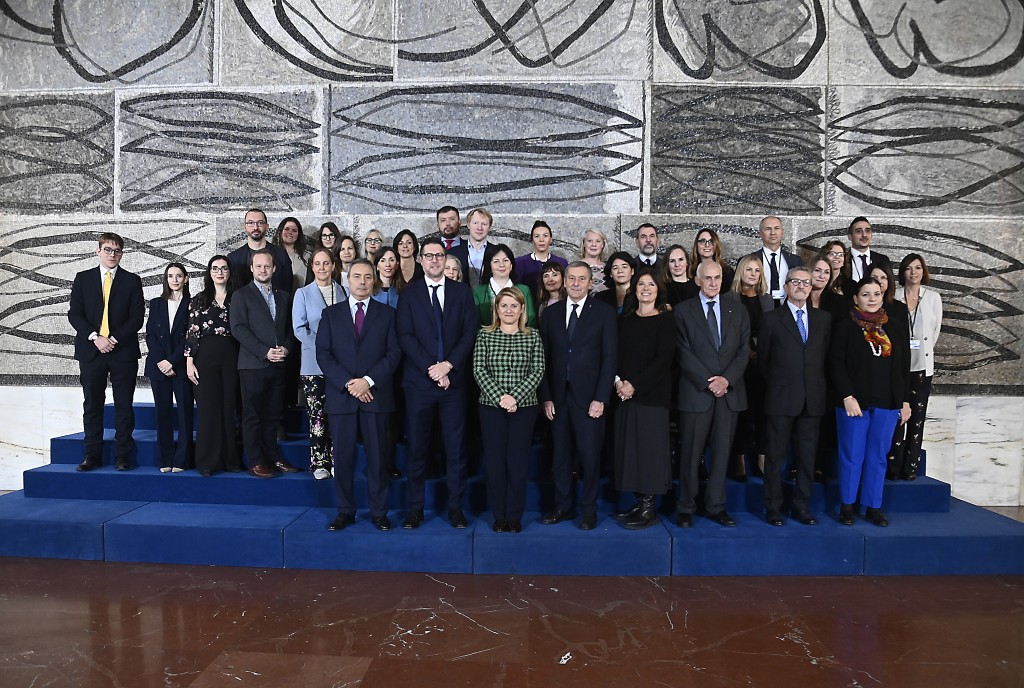
Uni-Italia organized the 4th International Conference of Agencies for the Internationalization of Higher Education, in collaboration with the Italian Ministry of Foreign Affairs and International Cooperation, the Ministry of University and Research and the Ministry of the Interior.
The conference was opened by the president of Uni-Italia and a former Italian Minister of Education, University and Research Mr Francesco Profumo.
He said: "The new needs of the higher education sector as well the dramatic effects of the demographic changes are related to direct and indirect impacts of polycrisis as: the lower birth rate, Covid-19, wars, economic crises, natural population changes (birth decrease), labour market."
Profumo added: "Education is a potential drive for socioeconomic development, particularly in a globalized world, where a highly skilled workforce can be an advantage in terms of productivity, innovation, and competitiveness."
The first panel "The economic impact of international students" was moderated by Mr Vito Borrelli, Head of Sector Higher Education and Erasmus+ (European Commission). The speakers were Sarah Ilchman, Co-President (IIE), Judith Azema, Communication Director (Campus France), Ana Isabel Sánchez Salmerón, Education Advisor to the Spanish Embassy in Rome (SEPIE), Maria Tsakali, Sector Lead Higher Education & Science, EU Region (British Council).
The second panel "The impact of international graduates on the labour market of the host country" was moderated by Irina Ferencz, Director (Academic Cooperation Association) and the speakers were Nina Salden, Head of Division Strategic Planning (DAAD), Kumi Tempels, Policy Advisor (NUFFIC), Eero Loonurm, Head of Higher Education International Promotion Agency (HARNO) and Maija Airas, Head of International Higher Education Cooperation Unit (EDUFI).
Eero Loonurm, the Head of HE promotion „Study in Estonia“ at the Estonian Education and Youth Board said: "All globaal case studies showed that international students bring positive contribution to the economy not only on the academic level, but also on the economic level. In the academic year 2019/2020, together with living costs, tuition fees paid to the universities and the tax contribution of working international students and graduates, the economic impact was more than 50 million euros, while government spending was around 30 million euros.“
Loonurm added: „The Italian initiative to have a joint publication of eight best case studies from the global level is a great initiative and has opened new ways of collaboration between the Estonian Education and Youth Board with other agencies all over the world.“
The joint publication is one of the outcomes of the 4th Conference with International Higher Education Agencies on The economic impact of international students co-organized by Uni-Italia and the Italian Ministry of Foreign Affairs and International Cooperation, in collaboration with the Ministry of University and Research and the Ministry of the Interior.
Additional information:
Uni-Italia. November 2023. Joint publication "The economic impact of international students and graduates on host countries"
Statistics Estonia. Analysis of the economic impact of international students (2019-2023)

