
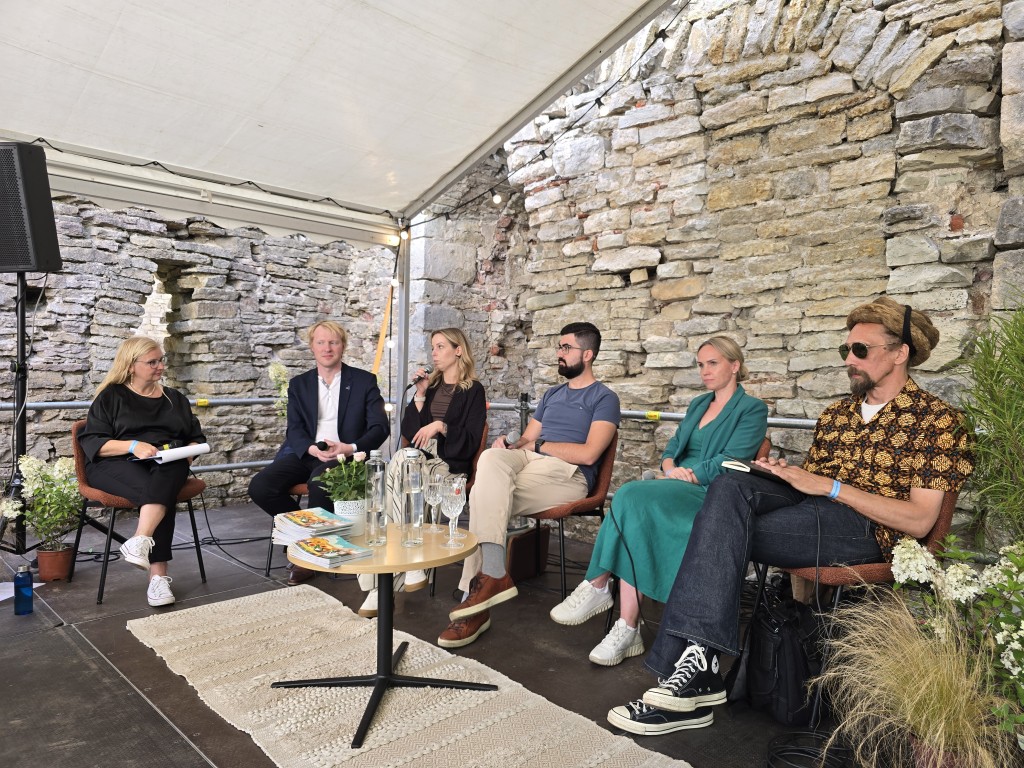
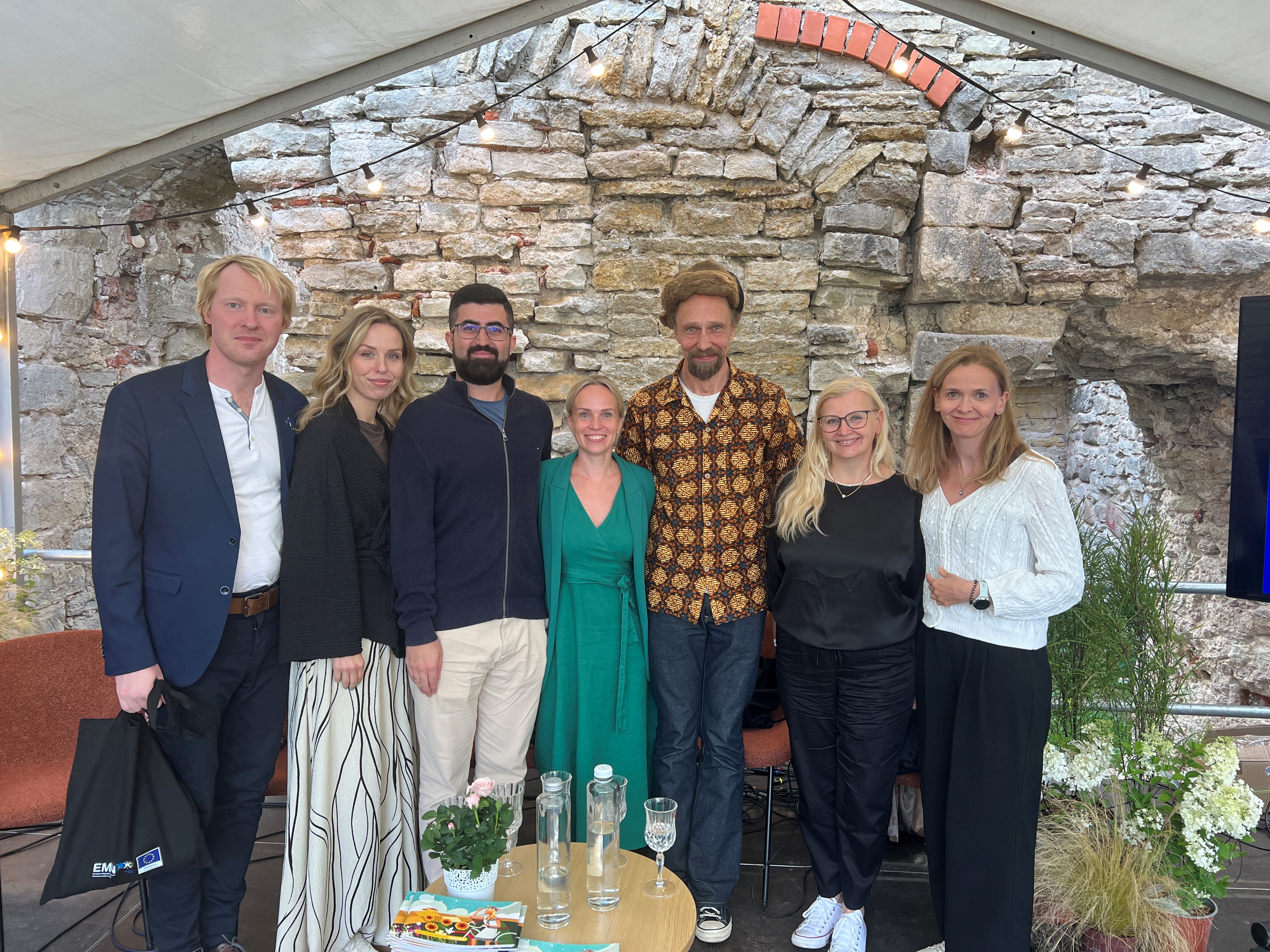
The panellists included Liis Valdsalu (Bolt), Killu Paal (Ministry of the Interior), Eero Loonurm (Harno), Ringo Ringvee (Estonian Academy of Security Sciences) and Berk Erdem, a migration specialist living in Estonia. The discussion was moderated by Eike Luik from the European Migration Network.
Highlights:
- Many European countries, including Estonia, face a demographic crisis – populations are ageing and the number of working-age people is decreasing.
- Thoughtful and well-designed migration policy helps ensure that Estonia attracts people with the skills it needs, while mitigating risks.
- A migration shift could mean recognising migration as part of wider population policy, aimed at turning negative demographic indicators into positive ones.
The debate focused on the immigration of third-country nationals to Estonia and on shaping smart migration policies that ensure both the successful functioning of society and demographic balance. A key question was how to steer migration in such a way that it supports economic growth while also taking into account the risks associated with migration.
Many European countries, including Estonia, face a demographic crisis – populations are ageing and the number of working-age people is decreasing. In Estonia, alongside the general population decline, immigration figures have also dropped. According to Statistics Estonia’s projections, Estonia’s population will be around 1.2 million by 2085, provided that net migration remains at approximately +4,000 people per year. At the same time, data show that the number of first residence permits issued by Estonia in 2024 decreased by 33% compared to 2023. The main reasons for this were Russia’s full-scale war in Ukraine and the related sanctions, as well as Estonia’s economic downturn caused by the energy and commodity price crisis and the wider economic impact of the war.
Against a backdrop of declining birth rates and immigration, the Estonian labour market is projected, according to OSKA, to require around 2,100 additional skilled workers and specialists each year. A similar trend is evident across other EU countries, where labour demand is driven by demographic ageing, technological development and the innovation required by the green transition. The highest demand is in healthcare, social welfare, construction, manufacturing, transport, hospitality, engineering and ICT.
The discussion highlighted that in Estonia the question is no longer whether more immigration is needed, but rather how migration is to be managed. Migration is not the only way to sustain population numbers, but it is an unavoidable element, since it is impossible to meet all workforce needs domestically.
Participants also considered what constitutes smart migration. It became clear that there is no single agreed definition. According to Killu Paal, migration policy must take into account both current needs and the long-term consequences of migration, while striking a balance between control and openness. Estonia’s aim is to maintain this balance – on the one hand, encouraging the arrival of those who bring added value to society, and on the other, preventing and mitigating risks, including misuse and security threats. Thus, Estonia has an interest in designing a smart and sustainable migration policy that considers the economic, social, demographic, security and cultural impacts in their entirety.
Liis Valdsalu stressed that successful migration is not only the responsibility of the state – employers also play a crucial role. Hiring foreign specialists requires more than offering a job; it is important to recognise that moving to another country is a life-changing decision. Employers therefore have a responsibility to support the newcomer’s integration, not only into the workplace but into Estonian society more broadly. Measures such as cultural and language training, or providing practical information, are essential for ensuring smooth integration.
The conversation then turned to security issues and migration-related risks. While many countries have simplified immigration from third countries, several have also tightened their rules to prevent misuse of migration and to regulate access to citizenship. Ringo Ringvee noted that Estonia must learn from both its own and others’ experiences, and also assess the capacity of its integration and social systems. Migration entails costs – for example, language learning, healthcare, childcare – which must be considered. He also emphasised the importance of allowing foreigners living in Estonia the opportunity to speak Estonian, as cultural self-assertion is a challenge. Furthermore, Estonia must be prepared to amend legislation if necessary, as some laws (such as the Private Schools Act) were adopted in very different circumstances. A security component in migration policy is unavoidable, and the state must have the capacity to react swiftly.
In recent years, the main countries of origin for immigrants to Estonia have shifted. Migration from traditional countries such as Russia and Belarus has decreased significantly due to sanctions, while immigration from other regions, such as India, has grown. At the same time, migration from so-called high-risk countries has increased, creating challenges for policy-making. The discussion underlined that Estonia should not oversell itself, but rather remain transparent about what it offers and what it expects in return. As Berk Erdem pointed out, foreigners moving to Estonia should be well informed, ensuring that those who arrive are suited to Estonia’s way of life and share its values. At the same time, Liis Valdsalu emphasised that businesses do not benefit from monocultural teams, and Killu Paal added that identifying strategic countries of origin – i.e. where it is most beneficial for Estonia as a whole to recruit from – is becoming increasingly important.
It was acknowledged that Estonia’s attractiveness has declined due to the geopolitical situation. Nonetheless, the country’s strengths remain its safety and family-friendly environment. Eero Loonurm highlighted potential solutions, such as extending the current nine-month period during which graduates from third countries may remain in Estonia to look for work. Visa policy could also be reviewed, drawing on best practices from abroad. For instance, the UK’s High Potential Individual Visa scheme allows graduates of the world’s top 50 universities to enter the country and seek employment for 2–3 years depending on their degree. Berk Erdem also mentioned the Digital Explorers 2 project implemented by ESTDEV, which last year brought 20 carefully selected young IT specialists from Kenya to Estonia.
In conclusion, the discussion emphasised the need for a moderately conservative migration policy. This does not mean closing Estonia’s doors, but rather preserving its language and culture. Greater use should also be made of the human resources already present in Estonia and willing to stay. A migration shift could mean recognising migration as part of wider population policy, aimed at turning negative demographic indicators into positive ones. Estonia should not become an isolated environment.
Migration is a natural and ever-evolving part of human history. Thoughtful and well-designed migration policy helps ensure that Estonia attracts people with the skills it needs, while mitigating risks. This requires open and meaningful debate, a careful balance of economic, social, demographic, security and cultural considerations, and a readiness to adapt to changing circumstances.

